UKRAINE FOR GOVERNMENT, MILITARY & POLICY · PART I · FREE
Europe is learning more from this war than we are.
That gap is a policy choice, and it is a correctable one. This is the talk — three parts on war, Ukraine, and the future of defense — given privately in San Francisco to the founders building for the largest rearmament since the Cold War. It is the assessment they got, unedited.
- Part I is free and plays the moment you sign up.
- From a West Point graduate and Iraq veteran who has lived in Kyiv since 2018 and taught Russian history before that.
- No pitch, no vendor deck. Part I is free and plays as soon as you sign up.
START HERE
Watch the talk
WHAT THE REPORTING MISSES
Four things the briefings tend not to say
Drawn from seventeen companies put through Ukrainian frontline units, and from the units themselves. Some of it is uncomfortable, which is the point of hearing it from outside the chain.
“We already receive reporting from Ukraine.”
You receive vendor reporting and liaison reporting. Neither tends to say which expensive Western systems stopped working after the first year, or which drones bought at scale arrive to units that gut and rebuild them before they will fly. The units say it plainly. They say it to people who are not selling them anything.
“Industry can test on our own ranges.”
No range has peer electronic warfare, GPS denial and massed drones at the same time, and no range gives an engineer feedback from the person whose life depends on the equipment inside of a fortnight. That feedback loop, not the terrain, is the thing that cannot be reproduced at home.
“There is no budget line for this.”
The single cheapest intervention available is a fund that lets domestic companies test in Ukraine. Most governments provide none, so the learning is left on the table and picked up by allies who did fund it. It is a small line item measured against what it buys.
“Ukrainian formations are not a model for us.”
Perhaps not wholesale — but corps there recruit their own soldiers, run their own procurement and operate their own R&D labs. They behave like businesses under fire. That model is worth understanding properly before some part of it gets copied badly.
WHO IS SAYING IT
ALL SIX RESULTS →US-government-funded letter of request, with a €100MM+ German follow-on in development.
Submitted letters of request for an acoustic sensor company, built on frontline demand.
Raised by an air-defense interceptor company on the back of frontline letters of intent.
The Borderlands Group, founded in Kyiv on day two of the full-scale invasion. Clients are anonymised by category — we do not name companies operating in an active war. Outcomes vary by product, performance and demand; no specific outcome is guaranteed.
PART I · FREE
Why War Matters
Why war is not an aberration but a permanent feature of how power works — and what that means for anyone building in defense.
- The power law of war, and why smaller forces beat larger ones
- Energy, economics, and how nations actually pay for wars
- The Last Supper of 1993: how 51 defense primes became five
- Man versus machine, and why there is still a human in the loop
- Clausewitz, the trinity, and the nine principles
- The defense reading list
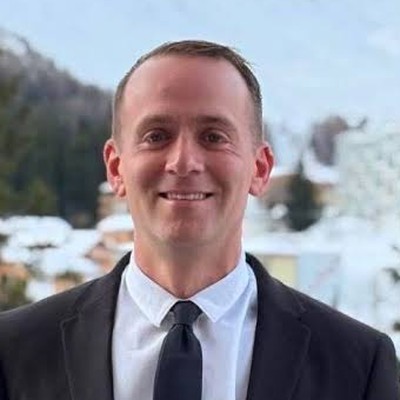
THE SPEAKER
Samuel P.N. Cook
Graduated West Point in 2000 and served as a US Army Cavalry officer — Regimental Adjutant under H.R. McMaster at Tal Afar, then troop command during the Surge in Iraq. After two tours, the Army selected him to earn his M.A. in World History at NYU, and he taught Russian History at West Point for three years.
He has lived in Kyiv for nine years. On day two of the full-scale invasion he founded The Borderlands Group, and has spent every day since helping defense companies enter Ukraine — building deep relationships across the Ministry of Defense, the General Staff, NATO, and operating units.
He has seen first-hand which companies get Ukraine right, which get it wrong, and why. This talk is what he tells them.
West Point ’00, adjutant to H.R. McMaster at Tal Afar and a troop commander during the surge. He travelled thirty-six hours to give this talk once, to one room — a train out of Ukraine, then a flight to California. This is that recording.
FREQUENTLY ASKED
Before you sign up
How is this different from the reporting we already receive?
Most reporting reaching capitals comes from vendors or through liaison channels. Neither tends to record which expensive Western systems stopped performing after the first year, or which mass-purchased drones arrive to units that strip and rebuild them before they will fly. Ukrainian units say this plainly to people who are not selling to them.
Why can industry not simply test on domestic ranges?
No range combines peer electronic warfare, GPS denial and massed drones, and no range gives an engineer feedback within a fortnight from the person whose life depends on the equipment. It is that feedback loop, rather than the terrain, that cannot be reproduced at home.
What is the cheapest policy intervention available?
A fund that lets domestic defense companies test their systems in Ukraine. Most governments provide no budget line for it, so the learning is left on the table and collected instead by allies who did fund it. Measured against what it buys, it is a small line item.
Is anything being sold on this page?
No. Part I is free and there is nothing to purchase here. The Borderlands Group does run paid briefings and advisory engagements for ministries, service branches and procurement bodies — those are arranged directly through the contact page, not through this talk.
START HERE
Part I is free. It plays as soon as you sign up.
Nothing follows it that you have to buy. If a briefing would be more useful than a recording, say so and we will arrange one.
Watch my talk