ARMOR · September–October 2004
The German Breakthrough at Sedan
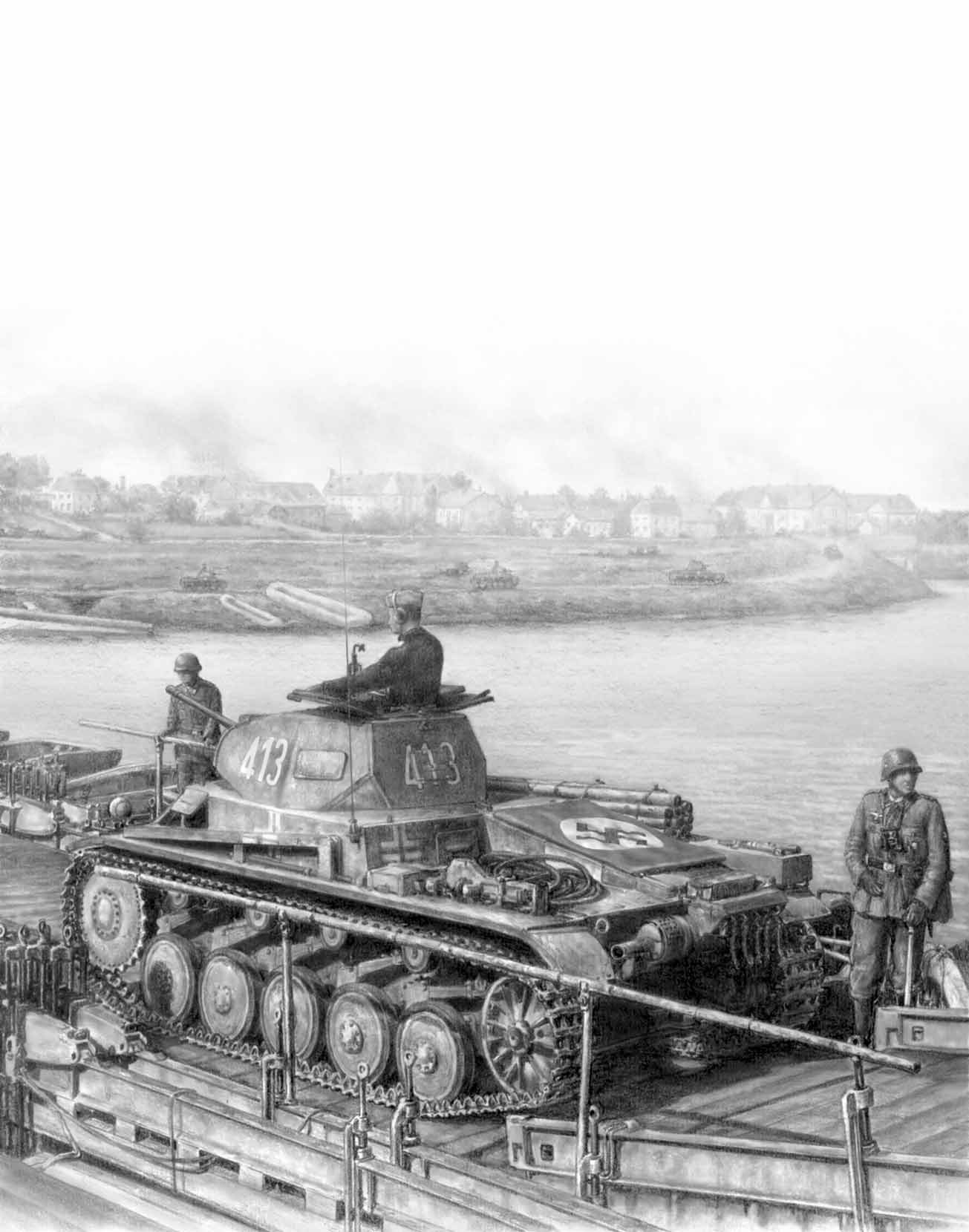
In May 1940, the world watched in astonishment as the German army conquered France in just more than six weeks. It is convenient to view the conquest of France as one of a long series of inevitable German conquests before the weight of the world’s resources came to bear and turned the tide of the war. However, closely examining the first crucial days of this campaign reveals a very close run. Looking back on the battlefield above Sedan, General Heinz Guderian describes the exploits of his XIX Panzer Corps as “almost as a miracle.”1
The mythical images of Blitzkrieg still permeate popular history, much as they did with contemporary observers in 1940. And that is just as Joseph Goebbels intended it.
Laced with images of tanks rolling through France, Goebbels’ films created the popular image of a numerically and technologically superior German army cruising effortlessly through France. Such images aimed to deter powers, such as the United States, from joining the war against an unbeatable German army. He skillfully concealed the truth. The combined French and Anglo armies actually contained 4,200 tanks compared to Germany’s 2,800. Moreover, French and British tanks contained both superior armor and firepower. The latest German tanks, however, had the advantage in terms of speed and communications ability.2 Technology was not the reason the Germans won. Both sides had access to the technology of the day; the Germans were successful, however, because they developed a new organization for mechanized warfare, a maneuver warfare doctrine to exploit technology, and most importantly, they encouraged bold and decisive leadership.
Planning for the Invasion
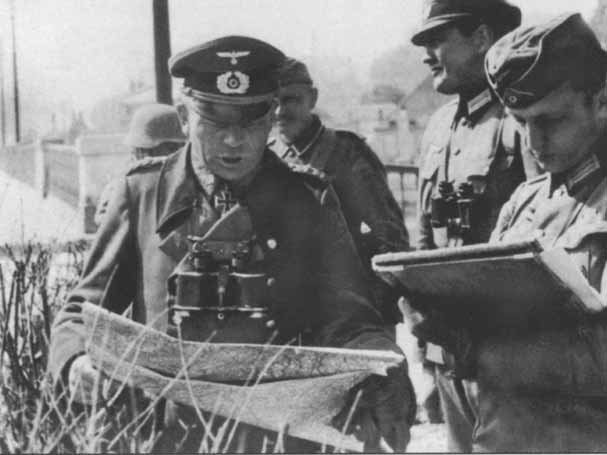
The plan for the Battle of France developed over eight months of intensive wargaming and heated debate within the German general staff. The original plan called for a mechanized reprisal of the 1914 von Schlieffen plan, where the German army would envelop the French army from the north through Belgium. On 25 October 1939, a junior staff officer, General Eric von Manstein, proposed a plan in which the Germans fixed the majority of the French and British forces in the north, while the German main attack penetrated the French defenses through the severely restricted Ardennes Forest. After crossing the Meuse River, Manstein’s plan called for a bold armored thrust to the English Channel to cut off and surround a majority of the French army and the entire British army in Northern France. The main effort was a Panzer group consisting of two Panzer corps and a motorized infantry corps.3 The Panzer group’s main effort, General Heinz Guderian’s XIX Panzer Corps, consisted of the 1st, 2d, and 10th Panzer Divisions and the crack motorized infantry regiment, GrossDeutschland. Guderian’s mission was to attack and penetrate the French defenses at the Meuse River near Sedan.
The German concept called for a rapid advance through Luxembourg with three armored divisions (the distance between the Northern and Southern Division was only 20km). Due to the restricted nature of the terrain, each division traveled on one or two routes. As the corps entered Belgium, each division planned to move a covering force in advance of its column to seize key objectives assigned for each day.
Finally, the corps would transition to the attack to cross the Meuse River. Though the crossing was the decisive point of the operation, Guderian did not publish his plan for the crossing in the operation order. This was in keeping with German officer’s thorough training in Moltke’s dictum that no plan extends “with any certainty beyond the first encounter with the main body of the enemy.”4 Instead, he relied on a variety of courses of actions his staff had developed in exercises along the Moselle River in late March 1940. Guderian also disagreed with his commander, General Ewald von Kleist, on the crossing point over the Meuse. The final operations order published on 21 March ordered XIX Corps to cross 10 kilometers east of Sedan. Guderian preferred to cross the river on both sides of Sedan, and his operations order for the approach to Sedan simply ignored the directives from higher. This was in keeping with the deeply ingrained German officer tradition of using discretion in execution of their mission orders from higher. Nevertheless, Guderian’s bold act of defiance, even for the German army, “was a startling act of independence.”5
Between March and May, XIX Corps moved to an assembly area along the Moselle River in Germany to conduct special training focused on approach marches in restricted terrain and river crossings. Officers participated in intensive wargames and briefings to become familiar with their division’s mission. Guderian also ensured extensive joint training with the Luftwaffe, as it was critical to his river-crossing plan. All the while, Guderian relentlessly pushed his junior officers to challenge orthodoxy and think of new ways to employ their forces in combined-arms formations.6
The Approach March
The attack order came with little warning at around noon on 9 May 1940. By 1700 hours, XIX Corps departed its assembly area on an approach march to the Belgian border. At exactly 0435 hours, 10 May, German engineers from three Panzer divisions began breaching obstacles across the frontier of Luxembourg.7 A special detachment of 125 commandos seized five bridges on the southern flank of the corps to provide early warning of a French counterattack until motorized infantry could relieve them. The 3d Battalion, GrossDeutschland Regiment, air assaulted using tiny storch planes to envelop the first expected pocket of resistance in Belgium on the route of the 1st Panzer Division, the corp’s main effort. Numerous small detachments of commandos air assaulted other critical passage points in the highly compartmentalized terrain to ensure access to all routes.8
Despite careful planning by the German general staff, Moltke’s dictum about no plan surviving far beyond contact was in full effect on 10 May. Two Belgian infantry bicycle companies occupied a carefully strong-pointed position between two towns, Martelange and Bodange, right across the Belgian border. The air assault battalion had landed to envelop this position and prevent reinforcements. They were indeed successful in preventing reinforcements and cutting communications. Ironically, however, this prevented the Belgian 4th and 5th Infantry companies from receiving the order to withdraw. Instead, they blew the bridge, entered the town, and fought tenaciously from 1200 to 2015 hours on 10 May. An infantry battalion, commanded by Lieutenant Colonel Hermann Balck, a motorcycle company, and an armed reconnaissance troop from the advanced guard finally overcame the resistance, allowing the engineers to move forward and repair the bridge for the 1st Panzer Division’s main body to cross.9
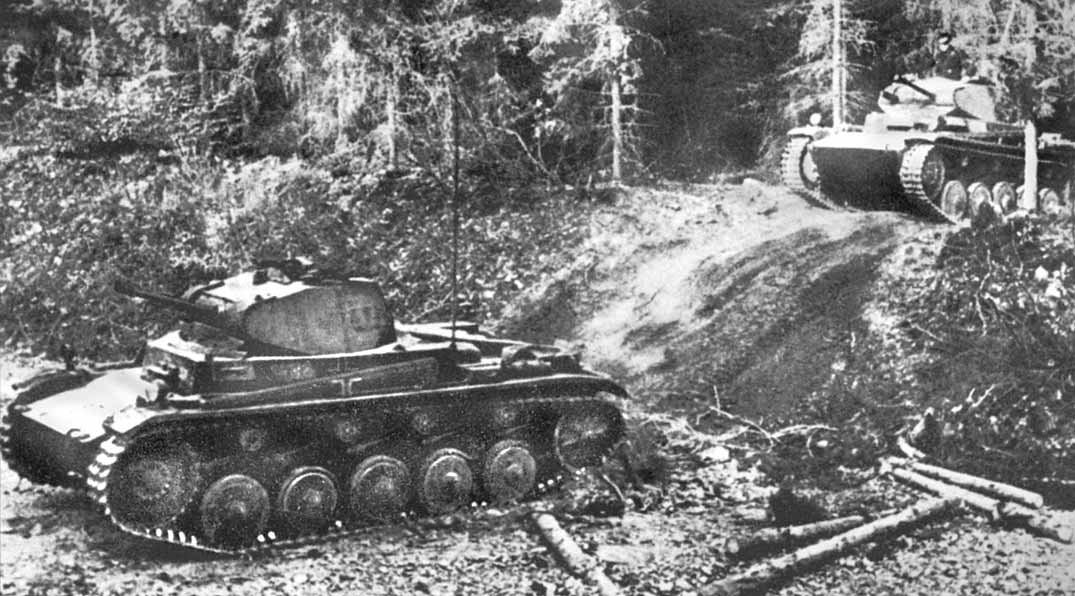
Meanwhile in the north, the 2d Panzer Division negotiated the most inhospitable terrain in the Ardennes, winding their way through deep wooded gorges along routes designed for north to south movement, rather than their westward direction of travel.10 The 10th Panzer in the south, reinforced by the GrossDeutschland Regiment, had an extremely successful march in the south and outpaced the other two divisions handily. On the evening of 10 May, Guderian received an order from von Kleist’s staff ordering him to turn the 10th Panzer division south to meet an advancing French cavalry division. Guderian recalls, “I asked for the cancellation of these orders; the detachment of one-third of my force to meet the hypothetical threat of enemy cavalry would endanger the success of the Meuse crossing and therefore of the whole operation.”11 Instead, Guderian ordered the 10th Panzer to shift northwest to avoid contact with the French cavalry to the south and continue pushing for Sedan. Guderian did not wait for a reply; instead, he made the change and had a discussion with von Kleist on the morning of 11 May regarding the change. “Thus Guderian bullheadedly ignored von Kleist’s order and then had the audacity to debate its merits.”12
Guderian’s new route brought 10th Panzer through difficult terrain, and at times, moved on 1st Panzer Division’s route. However, it was ahead of 1st Panzer at this point so Guderian quickly abandoned the plan to maintain the momentum of the attack. Still, Berlin pushed for stronger protection along the original southern route, and XIX Corps relented and ordered 10th Panzer to provide flank protection with at least one battalion along the southern route they had vacated.
This time, Guderian’s division commander, General Ferdinand Schaal, disobeyed the order and later convinced Guderian of the folly in splitting his forces. To solve the problem, von Kleist finally rushed a motorized infantry division from a follow-on corps to protect the fast-expanding southern flank of the XIX Corps.13 The German officers displayed a stubborn independence and insisted on executing their orders as they saw fit. Rather than punishing such behavior, the German officer corps rewarded the behavior as long as the officer was competent and could successfully justify his chosen course of action.
On the morning of 11 May, although 1st Panzer Division had failed to reach its objective of Neufchateau the previous night, Guderian maintained his objective for the second day — crossing the Semois River, which was the last major obstacle for the corps before the Meuse. Screening forces advanced on Neufchateau during the early morning of 11 May; meanwhile, the 2d Panzer Regiment advanced without artillery support due to the traffic jams through Bodange. The leading element of the division, the 2d Panzer Regiment reached Neufchateau around 0645 hours and bypassed the main resistance using southern routes around the city. The sight of German tanks in their rear area to the west of the city quickly broke the spirit of the French cavalry defenders and caused them to withdraw. However, the Panzer Regiment destroyed a motorized column and an artillery battery before the French could withdraw.
The 1st Panzer Regiment and one battalion from the 1st Infantry Regiment followed along with engineers to protect the southern flank as the tanks pushed forward to the Semois River.14 Rather than wait for a coordinated attack, the Germans preferred initiative to synchronization to take advantage of a fleeting opportunity before the French could organize a coordinated defense of Neufchateau.
At 1400 hours, the 1st Panzer Regiment passed forward to continue the division’s attack to the Semois River. Its objective was to establish a crossing point on the Semois River at Bouillon; 2d Panzer Regiment was ordered to cross the Semois 7 kilometers northwest of Bouillon at the town of Rochehaut. The 1st Panzer Regiment reached the outskirts of Bouillon at 1730 hours, but because they lacked infantry support, they were unable to hold the crossing sites and were forced to withdraw.
The 1st Panzer Division quickly created two battle groups to cross the Semois that night. Battle group Krueger, which was made up of two infantry battalions, two Panzer battalions, and engineers, fought through the streets of Bouillon to secure the southern crossing site over the Semois River. Battle group Keltsch in the northwest, consisting of only one infantry battalion and one Panzer battalion, seized a crossing site over the Semois at the town of Mouzaive at 2335 hours on 11 May — 5km northwest of the one assigned to him. Keltsch made the decision entirely on his own initiative after discovering the bridge was relatively undefended, even though it was clearly in 2d Panzer Division’s zone. 1st Panzer Division immediately reported the seizure of the crossing point to XIX Corps and requested permission to use it to cross the division’s northern elements. Since 2d Panzer was far behind, XIX Corps approved the violation of the boundary.15
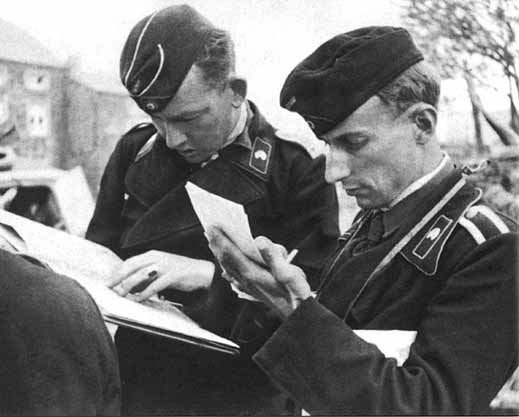
Events quickly overtook the previously established timeline, and the 1st Panzer Division shifted forces north to the Mouzaive crossing site. The rapid seizure of a crossing outside of its zone proved critical for the 1st Panzer Division, as corps needed the Bouillon road network to pass the 10th Panzer Division across the Semois due to deviation from their original route.16 Again, the Germans eschewed detailed synchronization for rapid decisionmaking at the lowest level to take advantage of the situation on the ground — all within the framework of the mission orders from higher. Corps staff quickly adapted to the changes on the ground and rapidly deconflicted changes to the plan affected by units on the ground. The result of the speed of the German advance was a rapid collapse of the French defensive effort on the Semois River. Meanwhile, the 2d Panzer Division raced to catch up to the 1st and 10th Panzer Divisions, which by 1300 hours on 12 May were in the woods 3km north of Sedan and the Meuse River.
The Battle of Sedan
On the afternoon of 12 May, Guderian boarded a small plane to travel back to von Kleist’s headquarters. He learned the attack across the Meuse would commence at 1500 hours the following day. Guderian initially hesitated because 2d Panzer Division would probably not be in position to participate in the attack, but he quickly realized it was more important to maintain the momentum of the attack. Von Kleist again ordered Guderian to attack 10km east of Sedan, but Guderian refused and insisted that he was already in position to attack through Sedan. Von Kleist had no choice but to accept Guderian’s recommendation. Guderian strenuously disagreed with von Kleist’s decision to switch from a protracted air bombardment, which would suppress the enemy’s artillery, to a short and concentrated attack, in an effort to deliver a knockout blow. Guderian believed such a short duration attack would be ineffective and leave his forces vulnerable to heavy artillery for the duration of the crossing. Von Kleist, however, refused to change his concept for air support.17
Guderian returned to his headquarters that afternoon and quickly published a two-page order that covered the following day’s attack on the Meuse. The order was almost identical to an exercise order conducted the previous fall with only dates, times, and locations changed. The order’s brevity owed much to the excellent training the unit had conducted prior to the invasion, which allowed them to greatly shorten orders due to a common understanding of how they fought together on this operation. The German military culture prized clear, concise orders with very limited guidance to subordinate units.18 The rapid publication of the order for the following day’s attack allowed XIX Corps’ subordinate units enough time to begin preparations for the attack and conduct thorough reconnaissance, despite the compressed timeline.
The air attack began with only a few bombers, which signaled to Guderian that the previously agreed-on scheme for air support was in place, rather than von Kleist’s plan for a massive, concentrated bombardment. This occurred because von Kleist’s order to the Luftwaffe arrived after the orders had been distributed to the air squadrons in support. Guderian began the attack as planned at 1500 hours. The French Xth Corps’ log clearly credited the German aerial attacks, stating, “German aviation played a preponderant role, even a decisive [one]. Its incessant attacks were launched against the [principal] line of resistance…[and] on the rear areas… Its action was continuous and massive.”19 Guderian’s assessment of the impact of air turned out entirely correct. The French infantry suffered marginally, but the effect on the French artillery proved devastating. Despite being poorly dug in, very few artillery tubes actually suffered damage at the hands of the German bombardment; the crews, however, ceased operating the guns almost entirely in search of cover from the constant, screaming attacks of the German dive bombers.20 A short, massive bombardment would have been a shock, but it would probably have caused little damage and allowed the gun crews to resume firing on the crossing sites.
The 1st Panzer Division in the center was the main effort, and therefore received the GrossDeutschland Regiment, two assault engineer battalions, a heavy engineer battalion, and direct support from corps artillery and the heavy artillery battalions of 2d and 10th Panzer Divisions. To the west, 2d Panzer Division would attack to cross in two locations around Donchery. To the southeast, 10th Panzer Division would attack into the southern suburbs of Sedan.21
The 1st Infantry Regiment crossed with two infantry battalions, reinforced with tanks and assault guns. The GrossDeutschland crossed at one point with two battalions following the crossing point. The 1st Infantry Regiment’s crossing succeeded largely due to effective direct fire support from a company of Mark IV tanks and a battery of 75mm assault guns supporting the attack. The 43d Engineer Battalion ferried troops across the river, while the 37th Engineer Battalion began ferrying equipment across the river to support the attack. As the infantry regiment established the bridgehead, the 505th Engineer Battalion began work on a 16-ton bridge to allow tanks and heavy artillery to cross.
The crossing remained largely unopposed by indirect fire, but it received heavy machine gun fire from the far bank. The infantry hesitated initially on the far bank after losing two boats to grenades and machine gun fire, but the battalion commander quickly took personal control of the situation and pushed the lead elements forward to silence the guns.22 Anxious to assess the situation, General Guderian crossed in one of the early waves of the attack. On reaching the far side of the Meuse, Lieutenant Colonel Balck admonished the general, “Joy riding in canoes on the Meuse is forbidden!”23 Robert Doughty remarked “the personal courage and close proximity to the fighting of the German leaders proved to be one of the most important elements in the eventual German success.”24
The 1st Infantry Regiment, under the energetic leadership of Balck, quickly attacked to clear French fortifications and trench lines to open the way for the GrossDeutschland Regiment to the east and the motorcycle battalion to the west, so they could cross the Meuse and secure the flanks of the bridgehead. The GrossDeutschland Regiment suffered heavy casualties initially as it tried to cross from the French bunkers; they eventually solved the problem by bringing up 88mm guns to silence the bunkers, which allowed two companies to cross. On the far side of the river, the GrossDeutschland Regiment advanced far slower than the 1st Infantry Regiment to its west. The 6th and 7th companies attacked to seize key bunkers that were hindering the advance; in the process, they moved west of the regimental boundary to accomplish their mission. Again, the Germans drew on their tradition of mission-oriented tactics to accomplish the task at hand instead of adhering to boundaries that did not fit the tactical situation at hand.25
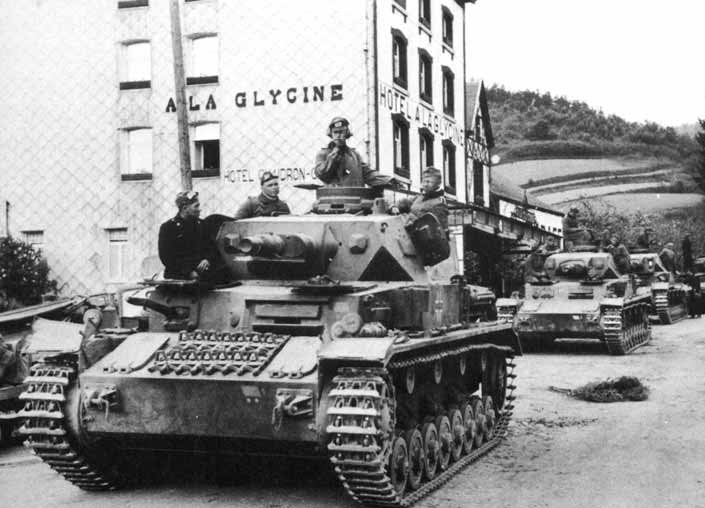
The attack in the 10th Panzer Division sector did not begin nearly as well as the 1st Panzer Division’s assault. The aerial bombardments against the French guns in this sector had little effect. Artillery fire destroyed a considerable portion of the boats that were to cross the 10th Panzer Division. For a while, the division considered withdrawing the attack. A young German staff sergeant and his squad, however, almost single-handedly breached the French river defenses, which salvaged the river crossing operation for the division.
Sergeant Rubarth and his engineer squad crossed near a destroyed railroad bridge and destroyed four bunkers along the Meuse River and then three more behind the river defenses. Another small infantry group under Lieutenant Hanbauer fought and cleared the entire French position on the heights of Wadelincourt. Subsequently, the 1st Battalion, 86th Infantry Regiment was able to cross and secure a bridgehead for the division.26 The actions of Sergeant Rubarth and Lieutenant Hanbauer reflected the lengths to which the German army had gone to ingrain individual initiative down to the very lowest levels. Both men, instead of waiting for more forces, seized and maintained the initiative they had gained to achieve objectives that were far beyond the scope of the limited tasks they were assigned. The effects of their actions on the entire XIXth Corps operation cannot be overstated. The 10th Panzer Division’s crossing secured a third crossing site over the Meuse out of the originally planned six.
The 2d Panzer Division failed to achieve its objective that day due to a late start on the attack and the large open terrain it had to cross on its approach to Donchery. French artillery poured more fire on the 2d Panzer than it had on the other two divisions. The 2d Infantry Brigade remarked the attack was “impossible” due to the strength of French direct and indirect fire from across the bank.27 East of Donchery, the Germans launched eight assault boats across the Meuse River. Only one boat reached the far bank, and the soldiers quickly swam back to safety on the nearest bank. It was not until late in the night, when the 1st Panzer Division cleared the bunkers overlooking the river, that the 2d Panzer was finally able to establish a crossing site in their zone.
By nightfall, the Germans had one bridge to cross vehicles, and three bridgeheads through which they could safely ferry men and equipment across the river. Were it not for the remarkable small-unit actions and combined-arms integration at the lowest levels, the bridgehead at Sedan could easily have achieved only local success instead of a dramatic breakthrough. Nevertheless, the Germans had managed to create a large enough bridgehead between the 1st and 10th Panzer Divisions to repulse French counterattacks on 14 May.
The XIX Corps had six infantry battalions and two Panzer Regiments across the Meuse by the following afternoon.28 Guderian had managed to push his tanks across just in time to defeat a concerted French counterattack by an infantry regiment and a tank battalion on the fields between Bulson and Connage. The Germans destroyed 50 tanks in the ensuing battle, and forced the French to flee south while the Germans followed in relentless pursuit.29
Breakout and Exploitation
On the morning of 14 May, Guderian turned his attention to exploitation of his successful penetration of the French defenses along the Meuse. Guderian asked the 1st Panzer Division commander if he should detach a flank guard to the south, as the rest of his division pivoted and raced west with 2d Panzer Division. The reply came from the commander’s aide, Major Wenck, “Klotzen, nicht Kleckern” — meaning attack concentrated, not dispersed. Guderian immediately decided to pivot the entire division along with the 2d Panzer Division in a bold dash to the west, forestalling any French effort to set up a subsequent defensive belt.30 Guderian detached the 10th Panzer Division and the GrossDeutschland Regiment to the XIV Corps commander until the relief in place around the village of Stonne was complete, at which time these units would rejoin his corps in their push to the west.31
The Germans had wargamed, pivoting west, but the German bridgehead was not nearly as strong as anticipated since a majority of the 2d and 10th Panzer Division vehicles had not yet crossed the river. Despite the desire of Berlin to build up a bridgehead before continuing the attack, Guderian pushed the attack west by setting objectives 30km to the west for 15 May. Guderian’s decision resulted in a furious argument with von Keist on the evening of 14 May about whether or not to continue the attack. Von Kleist finally relented, and allowed the attack to continue as Guderian had ordered. Had higher command known the truly precarious situation at the bridgehead, they most certainly would have vetoed the move.
Guderian’s willingness to take this extraordinary risk ultimately contributed to the envelopment of the French Ninth Army and their ultimate surrender after they were cut off at the channel. Von Kleist, however, deserves a lot of credit for mediating between his impetuous corps commander and the far more conservative forces in the army high command.32
The Battle for France ended just over five weeks after Guderian’s breakout to the west. XIX Corps went on to spearhead the drive to the channel and complete the encirclement of the majority of the French army and the entire British army. On 17 May, Guderian resigned his command after a heated dispute with von Kleist about an order to halt his drive. The order to halt had come from Hitler, who was so frightened by Guderian’s success. The Twelfth Army Group commander refused Guderian’s resignation, and he went on to serve with distinction through the rest of the campaign.
Tenets of Army Operations
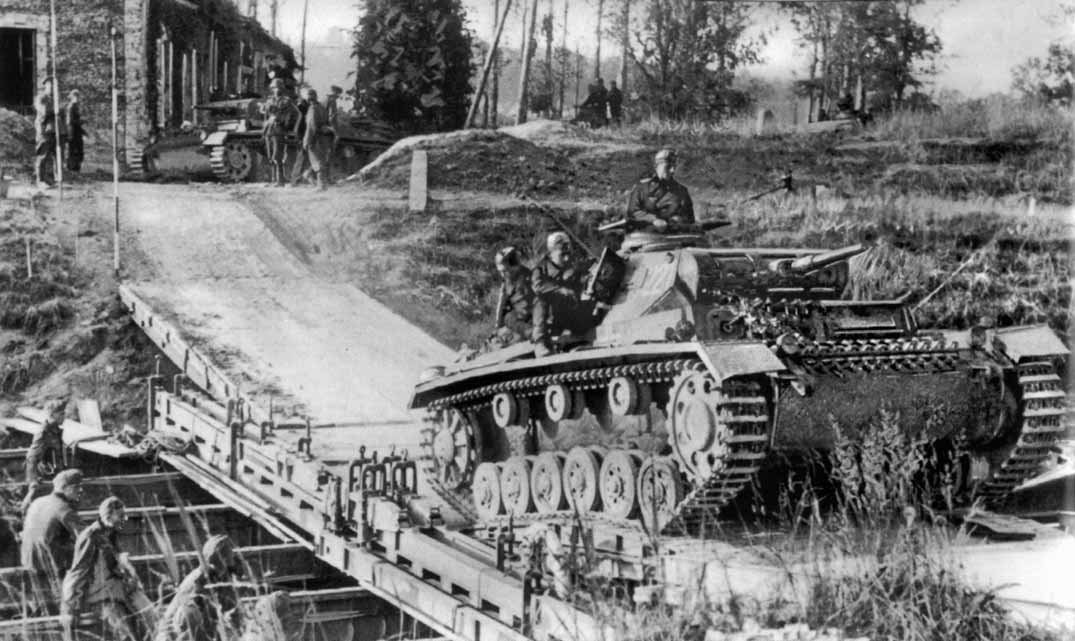
It would be useful to compare the principles with which the German army operated to our own tenets of Army operations: depth, agility, versatility, initiative, and synchronization. From the air assaults to secure key crossing sites and the insistence of Guderian to push the attack and bypass resistance, the Germans used depth to achieve decisive penetration across the Meuse and beyond.
The Germans also displayed remarkable agility throughout the campaign by changing assigned routes and improvising crossing sites whenever possible. While crossing boundaries caused great traffic jams at points, especially for the 2d Panzer Division, improvising was key to maintaining the momentum of the attack. Much credit goes to the flexibility of the German staff in planning the operation and their ability to rapidly change once it began. The German Panzer Divisions proved to be remarkably versatile combined-arms formations.
The commander of the 1st Panzer Division quickly realized his error in not attaching infantry to the drive on Semois on the night of 11 May, so he created combined arms battle groups to force crossings the following morning. Integrating German mechanized infantry, tanks, motorized artillery, engineers, and Luftwaffe was the key to success at the Meuse River crossings at Sedan.
The key to German success, throughout the campaign, however, was the determined initiative displayed at all levels of command. The Germans possessed a stubborn independent spirit within their officer corps that encouraged bold decisions without waiting for permission, as long as they did not violate the commander’s intent. Whether it was crossing boundaries, shifting routes of march, seizing bridgeheads outside of their zone, or continuing the attack far beyond their unit’s objective, German leaders at all levels demonstrated truly remarkable initiative. It is hard to imagine the crossing at Sedan succeeding without bold leaders such as Sergeant Rubarth and General Guderian.
Synchronization, however, was not a German strong point. On numerous occasions, officers on the ground chose to push forward without marshalling their resources for a combined attack. Despite the ideal of having all arms come to bear on an attack, the Germans realized that synchronization on a fast moving battlefield would lead to intolerable delays that would surrender the initiative in a fight. Whether it was the attack on Neufchateau without artillery or infantry support by the 1st Panzer Regiment, the seizure of the Mouzaive bridgehead or the attack on the Meuse without all forces massed, the Germans seemed to eschew this principle in favor of depth, initiative, versatility, and agility. Indeed, it seems that while a noble goal, synchronization runs contrary to the other four tenets of army operations in a fast paced, maneuver warfare environment.
Developing German Doctrine: 1917 –1940
The Germans succeeded in mechanized warfare not because of technological superiority, but because of the way they organized, trained, and led their forces given the new technology. It was the French and British who developed tank technology during the First World War. They attempted to break the tactical stalemate with technological solutions. Meanwhile, the Germans attempted to create a breakthrough in trench warfare by developing new organizations and an offensive doctrine to break the impasse.
In January of 1918, the German high command published The Attack in Position Warfare, which became the German doctrine for offensive operations through the end of 1918. The new doctrine used existing capabilities and forces and reorganized them to achieve a deep penetration on a narrow front and follow up with exploitation forces that aimed not to destroy front-line units, but plunge deep into the rear and disrupt enemy support and communications units. In essence, the Germans moved from positional attrition-based warfare to maneuver warfare that sought “keeping the enemy off balance, pressing the attack continuously, and retaining the initiative”33
The new German organization and doctrine for attack focused heavily on reconnaissance pull operations — meaning forces in the lead wave would find weaknesses and guide assaulting forces through, rather than sending limited forces to verify suspected positions before an attack. The attack started with an infantry probe from a neighboring unit to identify main enemy positions for the assault wave. Storm units, consisting of one to five infantry companies, one or two machine gun companies, one flamethrower section, one infantry gun battery, and one trench mortar company, quickly poured through lanes identified by the first wave of infantry. The combined arms nature of the storm units allowed them to press the attack far more effectively than branch pure formations. Artillery support was essential to the attack, but it was a tightly focused barrage that lasted for a short period followed immediately by the initial assault wave, instead of the day-long bombardments that previously helped the enemy identify the main attack.34 To prepare for the upcoming offensives in 1918, the German army embarked on an extensive training program to ensure that junior leaders received the training and initiative to lead new decentralized attacks.
The German offensive of March 1918 achieved remarkable tactical success and produced more movement on the front than at any time since the great offensive of 1914 before trench warfare developed. The attacks, however, failed to achieve operational breakthroughs large enough to break the French army. This was due to a lack of resources and mechanization to carry the attack forward through subsequent stages. The main problem the Germans encountered was outrunning the range of their heavy artillery.35 As Germany reached strategic exhaustion in the summer of 1918, the assaults faltered and the allies went on the offensive buoyed by the arrival of fresh American troops. Ultimately, Germany did not have the resources to exploit their new offensive doctrine.
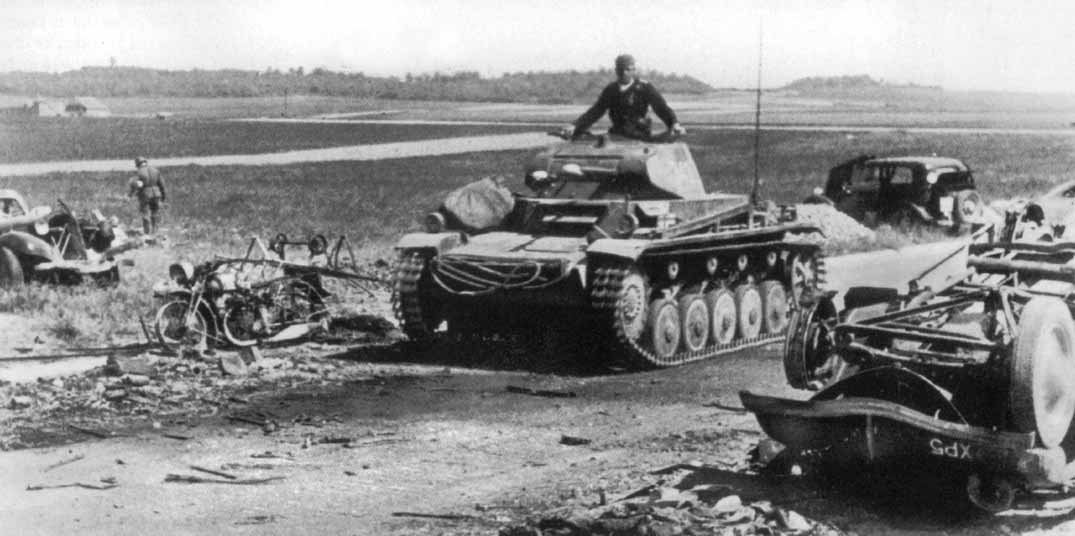
The interwar years brought a unique chance for the German army to completely redesign its army. Ironically, it was the harsh terms of the Treaty of Versailles that provided them this opportunity. Limited to 100,000 men and banned from owning any substantial equipment, the German army had no other choice but to take on a study of lessons learned and develop doctrine before they could field the equipment. The Germans conducted an extensive review of the First World War that identified mistakes made during the war and tactical solutions that would solve future problems. The new chief of the German army, Hans von Seeckt, developed an intellectual atmosphere in the army that encouraged debate and avoided the intellectual stagnation that plagues so many armies. Officers who disagreed with the new concepts on operational warfare were not only allowed, but encouraged to disagree openly and propose radical new alternatives. As the Germans found ways to move past restrictions imposed by the Treaty of Versailles, they then integrated technology into mobile warfare doctrine they had developed. Finally, the true secret to German success was relentless training they conducted to refine and develop their doctrine, right up to the invasion of France. They focused on developing bold, decisive leaders to execute this decentralized form of warfare.36
In contrast to the Germans, the French and British applied the new technology to old formations and failed to formulate a doctrine to match newly available technology. Ironically, reformers such as Liddel Hart and Charles De Gaulle, found little favor in the conservative British and French armies, but served as inspiration for the German mechanized theorists during the interwar years. The French forces that the Germans defeated in 1940 relied on a static, tightly scripted, methodical battle that remained largely unchanged from the First World War.
Lessons for Transforming into an Information-Age Army
The United States faces a remarkably similar situation that the Germans faced during the interwar years. Similar to Germany after the First World War, we have many lessons from recent conflicts in Iraq and Afghanistan. The information technology exists, but it is time now to find an organization and a doctrine that will exploit it to its maximum advantage. In Transformation Under Fire, Douglas Macgregor correctly points out that the United States has changed little since the end of the Second World War in terms of our organization and doctrine.37 Despite the AirLand Battle doctrine adopted in the 1980s, many reformists argue that we have not adopted the decentralized, mission orders maneuver warfare doctrine that made Germany so successful during the Second World War. Simply putting new technology on old formations will not work.
Just as the French and British grafted mechanized forces into their existing structures, the United States faces the risk of imposing new technology on archaic organizations and doctrine with potentially crippling results. The biggest bottleneck on tomorrow’s battlefield will be bandwidth — we can only create so much of it on the battlefield. Will the U.S. Army use this finite amount of bandwidth to reinforce existing centralized, hierarchical control systems; or will it use it to create organizations that enable junior commanders to pull information from higher and coordinate with adjacent units to make independent, timely decisions? The Germans also faced this problem with the advent of the radio and equipped all vehicles with FM communications to enable tactical decisionmaking at the lowest levels. Meanwhile, the French used new information technology to reinforce a rigid command and control system that cemented the dominance of higher headquarters over information, paralyzing local decisionmaking and initiative at the front lines of the battle. They did not use radios on every vehicle and therefore failed to empower junior leaders to make decisions.
More important than even organization and development of a maneuver warfare doctrine, however, is developing a culture in the officer corps that encourages thought and candid discussion at all levels. The Germans, while developing their doctrine, regularly distributed proposals to solicit feedback from all ranks. Sometimes very candid, blunt assessments came back from the lower ranks. On one occasion, an officer wrote a scathing critique of the new offensive doctrine developed before the spring offensive in 1918. General Ludendorff published the critique as an appendix to the new doctrine to stimulate discussion and further refinement from his field commanders. It is hard to find a similar example in the U.S. Army of encouraging such free thought and discussion.
Ultimately, encouraging junior leaders to think will pay great dividends on the battlefield. The German maneuver warfare doctrine thrived on speed and controlled chaos, but it would have fallen apart with a timid, risk-averse officer corps. The Germans rewarded strong character, which translated into bold decisions at critical moments where it was simply not possible to delay for a decision or approval from higher. Before embarking on a bold change in our Army’s organization and doctrine, we must look carefully at refining our officer selection and education system that will produce leaders capable of executing such decisive maneuver on the battlefield of the future.
Notes
CPT Samuel Cook is currently a student at the John F. Kennedy Special Warfare School, Fort Bragg, NC. He received a B.S. from the United States Military Academy. His military education includes Air Assault School, Armor Officer Basic Course, Scout Leaders Course, Armor Captains Career Course, Combined Arms and Services Staff School and Airborne School. He has served in various command and staff positions, including assistant operations officer, scout platoon leader, and tank platoon leader, 1st Squadron, 4th Cavalry Regiment, Schweinfurt, Germany.
Notes
- Robert Doughty, The Breaking Point: Sedan and the Fall of France, 1940, Archon Books, Hamden, 1990, p. 1. ↩︎
- Kenneth Macksey, Guderian: Panzer General, Greenhill Books, London, 1975, p. 100. ↩︎
- Ibid., pp. 97-99. ↩︎
- Doughty, p. 39. ↩︎
- Ibid. ↩︎
- Ibid., p. 41. ↩︎
- Ibid., pp. 42-44. ↩︎
- Ibid., p. 45. ↩︎
- Ibid., pp. 48-54. ↩︎
- Ibid., pp. 62-63. ↩︎
- Heinz Guderian, Panzer Leader, Da Capo Press, New York, 1952, p. 99. ↩︎
- Doughty, p. 59. ↩︎
- Ibid., pp. 60-61. ↩︎
- Ibid., pp. 65-66. ↩︎
- Ibid., pp. 68-70. ↩︎
- Ibid., pp. 71-72. ↩︎
- Guderian, p. 101. ↩︎
- Ibid., p. 102. ↩︎
- Doughty, p. 136. ↩︎
- Ibid. ↩︎
- Guderian, pp. 102-104. ↩︎
- Doughty, pp. 142-144. ↩︎
- Guderian, p. 102. ↩︎
- Doughty, p. 142. ↩︎
- Ibid., pp. 144-150. ↩︎
- Ibid., pp. 154-157. ↩︎
- Ibid., pp. 153-154. ↩︎
- Guderian, pp. 104-105. ↩︎
- Doughty, pp. 211–213. ↩︎
- Macksey, p. 108. ↩︎
- Guderian, pp. 106–107. ↩︎
- Doughty, pp. 220–224. ↩︎
- Timothy Lupfer, The Dynamics of Doctrine: The changes in German Tactical Doctrine During the First World War, Combat Studies Institute, Fort Leavenworth, 1981, p. 41. ↩︎
- Ibid., pp. 44-45. ↩︎
- Ibid., pp. 45-50. ↩︎
- James Corum, The Roots of Blitzkrieg: Hans von Seeckt and German Military Reform, University Press of Kansas, Lawrence, 1992, pp. xvi–xvii. ↩︎
- Douglas A. Macgregor, Transformation Under Fire: Revolutionizing How America Fights, Praeger Publishers, 30 September 2003. ↩︎
First published in ARMOR, the professional bulletin of the U.S. Army
Armor Branch, September–October 2004, pages 8–15. Reproduced here by the
author. Works of the U.S. federal government are not subject to copyright.
Samuel P.N. Cook went on to teach Russian history at West Point and now writes from
Kyiv. The argument in this article — that the Germans won in 1940 on doctrine,
organisation and the willingness of junior officers to disobey, not on better tanks
— is the same one he makes about Ukraine today in
the manifesto and in
the talk.